If you race as an age-grouper and you've ever sent a sponsorship email that went nowhere, you've probably wondered what brands are actually looking for. Mostly, it's reach and image. Here's how the decision usually gets made, where it breaks down, and what it means if you train seriously but don't race for a living.
What brands look at when they choose an athlete
There's no standard formula, but the same few things keep coming up.
Audience fit and reach
Follower count and engagement rate are usually the first numbers a marketing team checks. They're public, quick to compare, and tied to what the brand wants: being seen by the right people.
Image and product fit
A nutrition company wants someone who fuels like a competitor. A bike brand wants an athlete whose racing makes the bike credible. A thesis from the University of Jyväskylä, based on interviews with companies that sponsor individual athletes, found that for endurance athletes this kind of fit was one of the main reasons a company said yes. So were the personal preferences of the people in charge.
Character and reliability
A sponsor is putting its name next to yours. Under Armour's SVP of global retail said it plainly at a 2016 Fortune summit: "The biggest thing we look for is character."
Why follower count is a weak signal
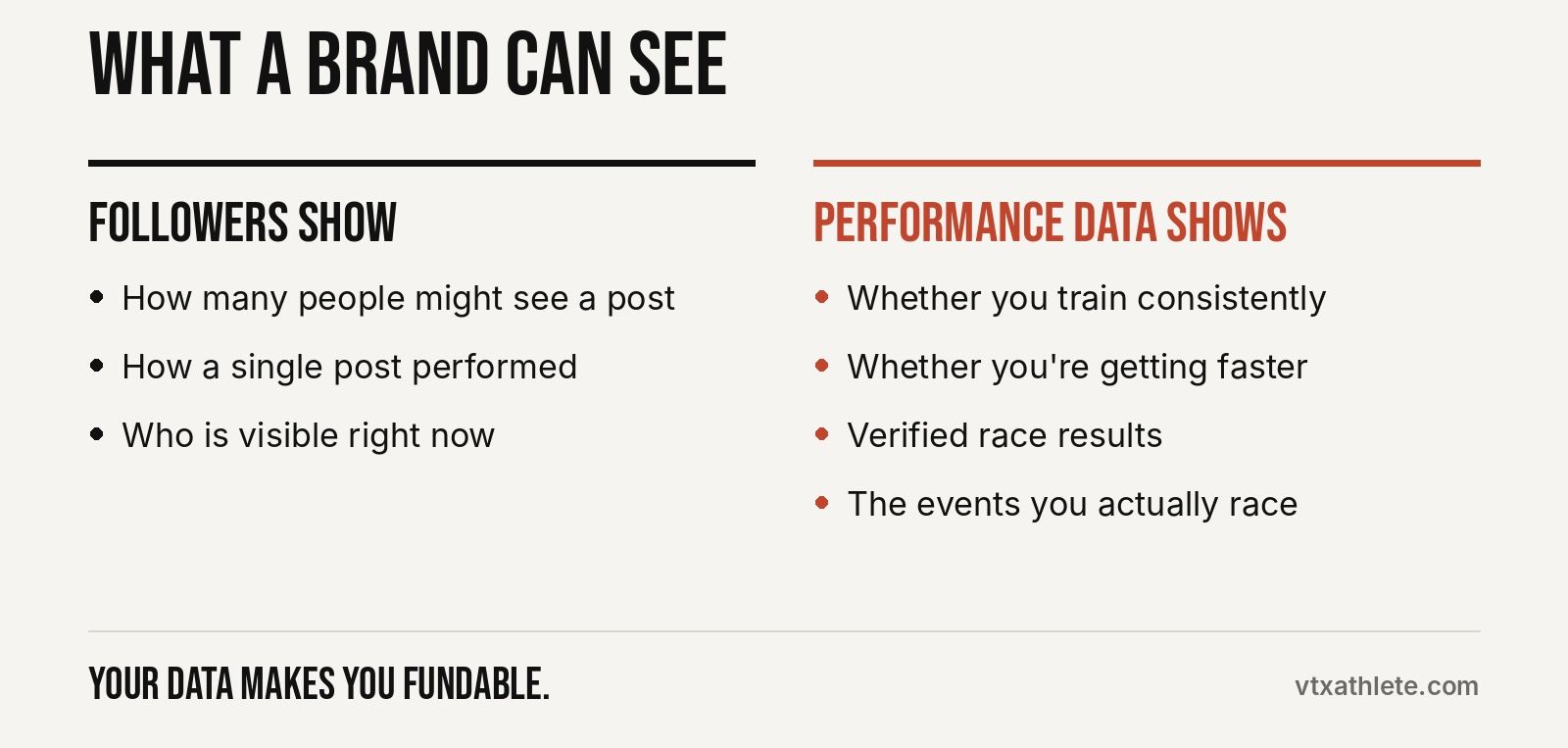
Followers show how many people might see a post. They don't show whether you trained all winter, whether your times are dropping, or whether you'll still be racing next season.
The Jyväskylä research also found that companies struggled to measure what they got back from sponsoring individual athletes. When the return is hard to measure, people fall back on what's easy to see.
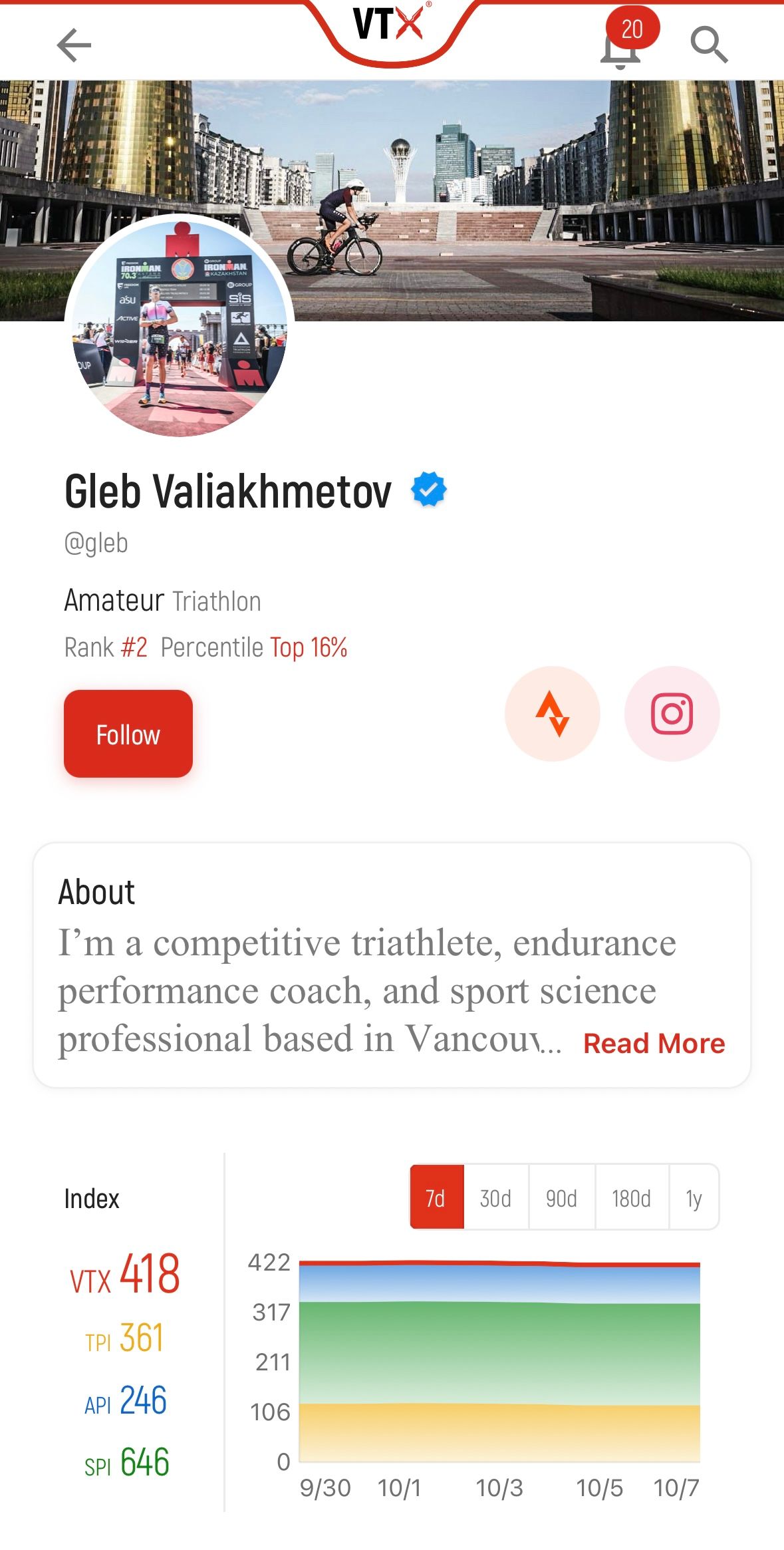
That's a big part of why sponsorship feels closed off below the pro level. Gleb Valiakhmetov, an age-group athlete and VTX ambassador, put it this way:
"As an age-group athlete it can be challenging, and I'm speaking from my experience, finding sponsorship, because it always seemed that big brands, even the local stores, are not really interested in age-group level competition."
Gleb Valiakhmetov, VTX ambassador
What performance data tells a brand
Endurance sport produces a lot of hard data: training logs, race results, splits, progression from one season to the next. That data answers what a follower count can't. Is this athlete consistent? Are they getting faster?
Some brands have worked this way for years. In 2011, First Endurance's sponsorship coordinator went through more than 200 proposals before choosing its triathlon team, and named performance and quality as what the chosen athletes had in common.
The problem is that this data sits across different apps and race-result sites, in formats a brand can't compare quickly.
What this means if you're an age-group athlete
You don't need a huge following to be worth backing. You need performance that's easy to read:
Keep your training data in one place and up to date.
Link to official race results, not screenshots.
Show your progression, not just your best day.
That's what the VTX Index was built for. It combines training data, race results and social reach into one score, so performance counts alongside popularity. It won't guarantee anyone gets backed, but it gives brands a fairer way to compare athletes, including ones they'd otherwise miss.
Key takeaways
Most brands choose athletes based on audience, image fit and reach.
Followers show visibility, not consistency or progression.
Sponsorship returns are hard to measure, so brands fall back on what's easy to see.
Your data makes you fundable.